
By Sok Sovan
If we want the world to respect our nation, we must showcase not only our glorious past—but also the Intelligence of Our People Today.
If we truly want others to respect our nation, we must not rely solely on boasting about a glorious past.
We must also demonstrate the capability, intellect, and wisdom of our citizens in the present day.
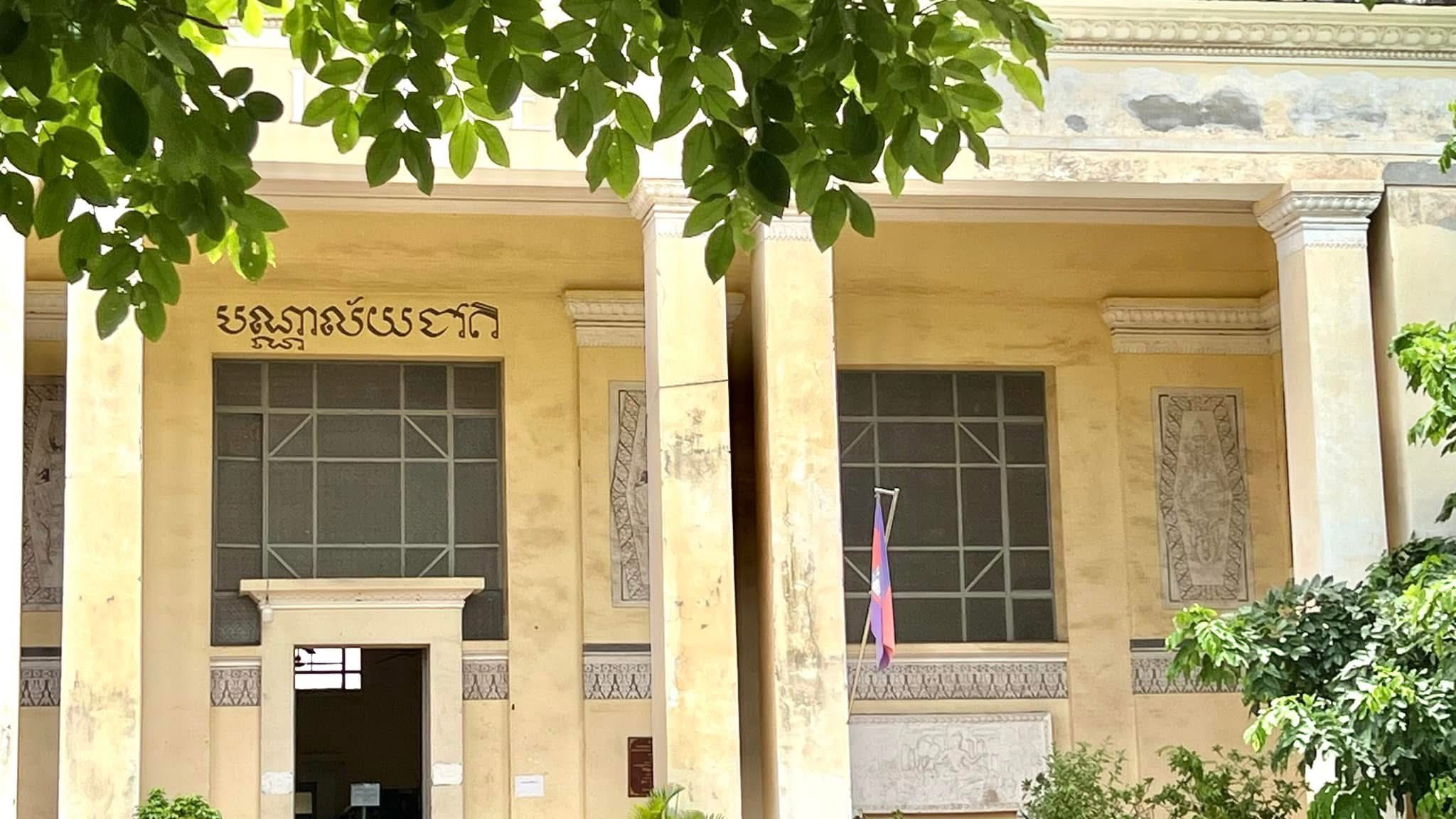
We should all make an effort to visit the National Library from time to time.
Many books there are “sleeping,” untouched and unread.
From what I have observed, the atmosphere is strikingly quiet—on average, only five to ten readers per day.
This silence is not peaceful; it is deeply concerning.
Why has our National Library become like this?
I have traveled abroad and witnessed libraries bustling with life.
People of all ages come and go continuously—reading, borrowing books, researching, extracting data.
Each person sits quietly, focused and determined, engaged in learning and discovery.
It is an environment full of purpose, productivity, and hope.
But when we look back at ourselves—
Where is our culture of reading?
Where is our desire to learn?
Where is the habit of spending free time in libraries, exploring new knowledge?
If everyone remains “busy” without meaningful purpose, busy with things that bring no value, how long will our nation remain stagnant and pitiful?
As Cambodians, at the very least, we should step into a library once in our lives. More importantly, we must change our mindset:
👉 A library is not a place of entertainment, it is a gathering place of wisdom.
It sharpens our thinking, trains the brain, and transforms distorted perspectives into clarity.
It teaches people how to think, not merely what to think.
We must cultivate the habit of going to libraries—to research, to learn, and to grow—
so that we can become modern individuals rich in knowledge and skills.
Remember this:
👉 If you love libraries, it means you love self-development.
If you feel embarrassed holding a book,
why do you feel no embarrassment holding bottles, cans, or glasses of beer?
Some people even call alcohol-centered gatherings a “culture of friendship.” But friendship sealed by alcohol is like pouring fuel onto fire. Friends turn into enemies. Husbands and wives who once loved each other turn hostile. In a blink of an eye, reason disappears, self-control is lost, and people become more violent than before.
Some even say, “If you don’t drink with us, you’re not our friend.”
But when illness strikes—
who comes to visit you?
Who takes care of you?
Who suffers on your behalf?
This is something we must seriously reconsider.
The culture of a nation should never be led by alcohol. Khmer culture is ancient, refined, and thousands of years old. If you cannot help row the boat forward, at least do not rock it or drag it backward. If you want to know how developed a country truly is, look at whether it is rich in libraries.
Libraries are vast reservoirs of national knowledge—irreplaceable and essential. A country whose people love reading will be rich in intellectual capital, strong in social resources, and capable of producing enlightened citizens who drive rapid national development.
In developed societies, people rarely waste time doing nothing. At the very least, they carry a book with them—
preferring reading over endless scrolling on phones. They understand that time is valuable, but knowledge is even more valuable. If we do not actively seek knowledge ourselves, rarely will any “magical wisdom” come looking for us.
Reading is a culture — a cultivation of wisdom that leads to personal growth, dignity, and progress.
It benefits:
- The individual
- The family
- Society and the nation
Everything begins with loving books, then forming the habit of reading. Reading is a skill that requires consistent practice to become effective. Even sharing images or content related to reading can influence others — encouraging those who have never read to begin.
🔍 Why Is Reading the Driving Force of Society?
👉 Expanding Worldviews
A single book can take us across the world, exposing us to cultures, technologies, and innovative ideas we may never encounter in daily life.
👉 Developing Critical Thinking
People who read extensively are better at analysis.
They are less likely to fall for misinformation and more capable of solving social problems intelligently.
👉 Improving Human Capital
Developed nations are those that transform “physical labor” into “intellectual power.”
Reading is a shortcut that allows us to absorb decades of others’ experiences within just a few hours.
In an age flooded with fake news and manipulation,
👉 reading is a weapon.
Analytical and philosophical reading forces the brain to engage in logical reasoning. Readers do not merely remember—they question. A society with many readers is harder to deceive, harder to manipulate politically, and better equipped to make decisions based on evidence and reason. This becomes the foundation of good governance and accountability.
Reading is not just a personal hobby— it is a strategy for national protection and national development. A country poor in books is a country most vulnerable. A lack of wisdom is a disease that destroys society from within — through ignorance, division, and decay. Khmer ancestors were scholars who carved knowledge into stone and palm leaves. When Cambodians return to reading today, we are reconnecting the intellectual bloodstream of our civilization. Each time we read, we continue our ancestors’ legacy and build a strong foundation for future generations — so that no one dares to look down on our nation as intellectually weak. Do not wait for grand libraries before you begin reading. Start with one book in your bag. Start with ten minutes before sleep. Start by sharing good ideas with those around you. When the fragrance of knowledge spreads throughout Khmer society, the light of prosperity will arrive—without us having to chase it.
In conclusion:
If we want the world to respect our nation, do not boast only about a glorious past. Boast also about the intellect and capability of our people today. Ask yourself honestly: “How many books have I read so far?”
📖 The value of literature depends on its readers.
 0.000 SRY